
Understanding the English Alphabet Code has never been easier!
The Beginning Reader Toolkit is for children at the beginning stages of their literacy development. It’s also perfect for older kids who are struggling with reading and writing.
The Reading For Life curriculum includes everything you need to teach beginning and remedial readers. It’s perfect for teaching our complex English alphabet code in a systematic, logical way that works. Teachers in traditional classrooms, as well as homeschooling parents, will find our carefully curated sets of cards indispensable at every stage. Our worksheets provide the varied practice kids need for the code to stick in their memories.
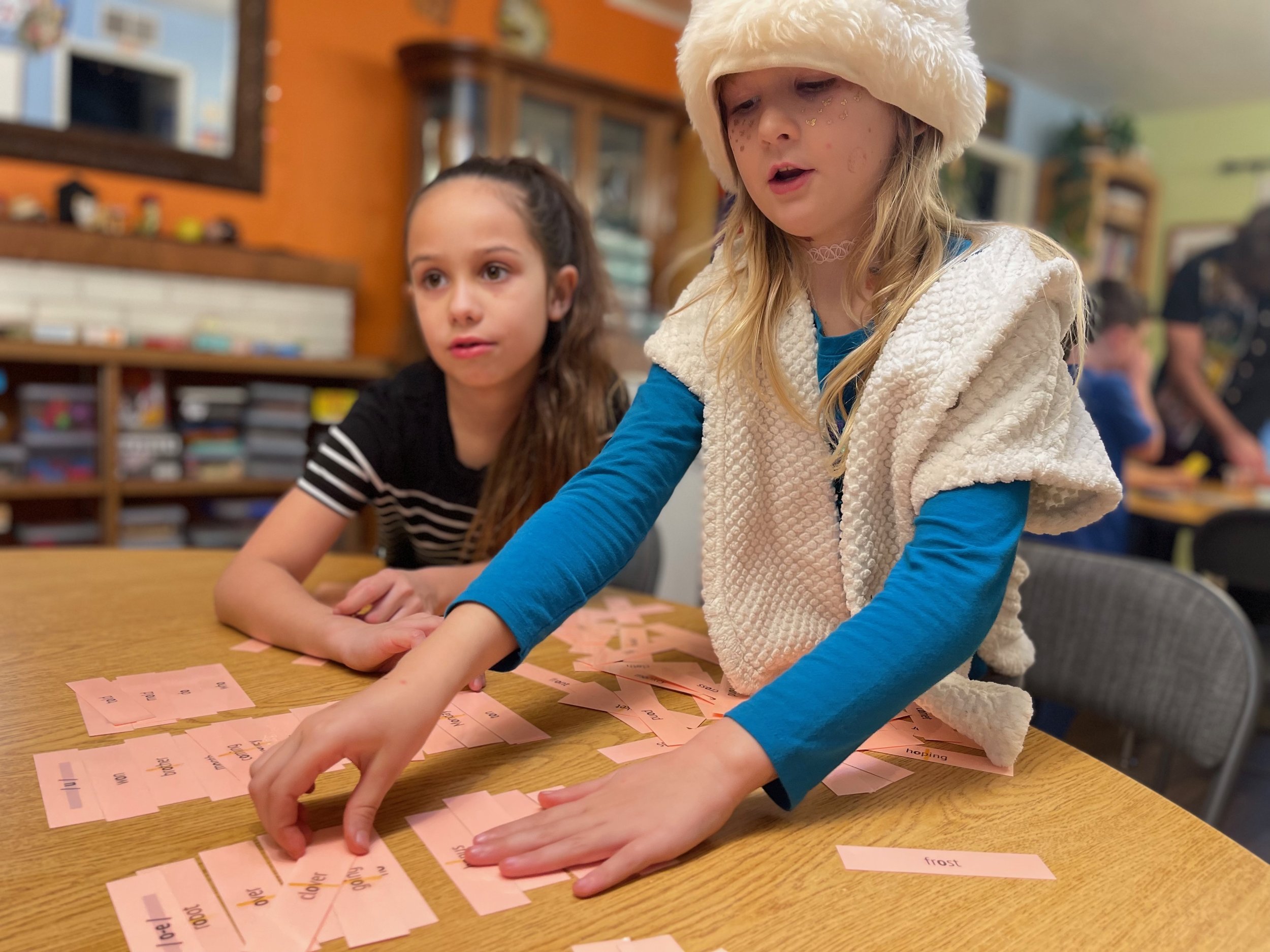
Students explore spelling patterns by reading and sorting word cards into logical categories. Children are natural pattern seekers, and learn best by discovering things for themselves. We’ve curated the entire English spelling code, organized it according to a linguistic framework, and put it onto word cards. Word cards provide low pressure reading opportunities, and sorting is an activity that grows logical connections that stick. Our word sorts cultivate a sense of discovery, as children start recognizing the patterns in the words themselves. They provide the basis of student discovery of the code.
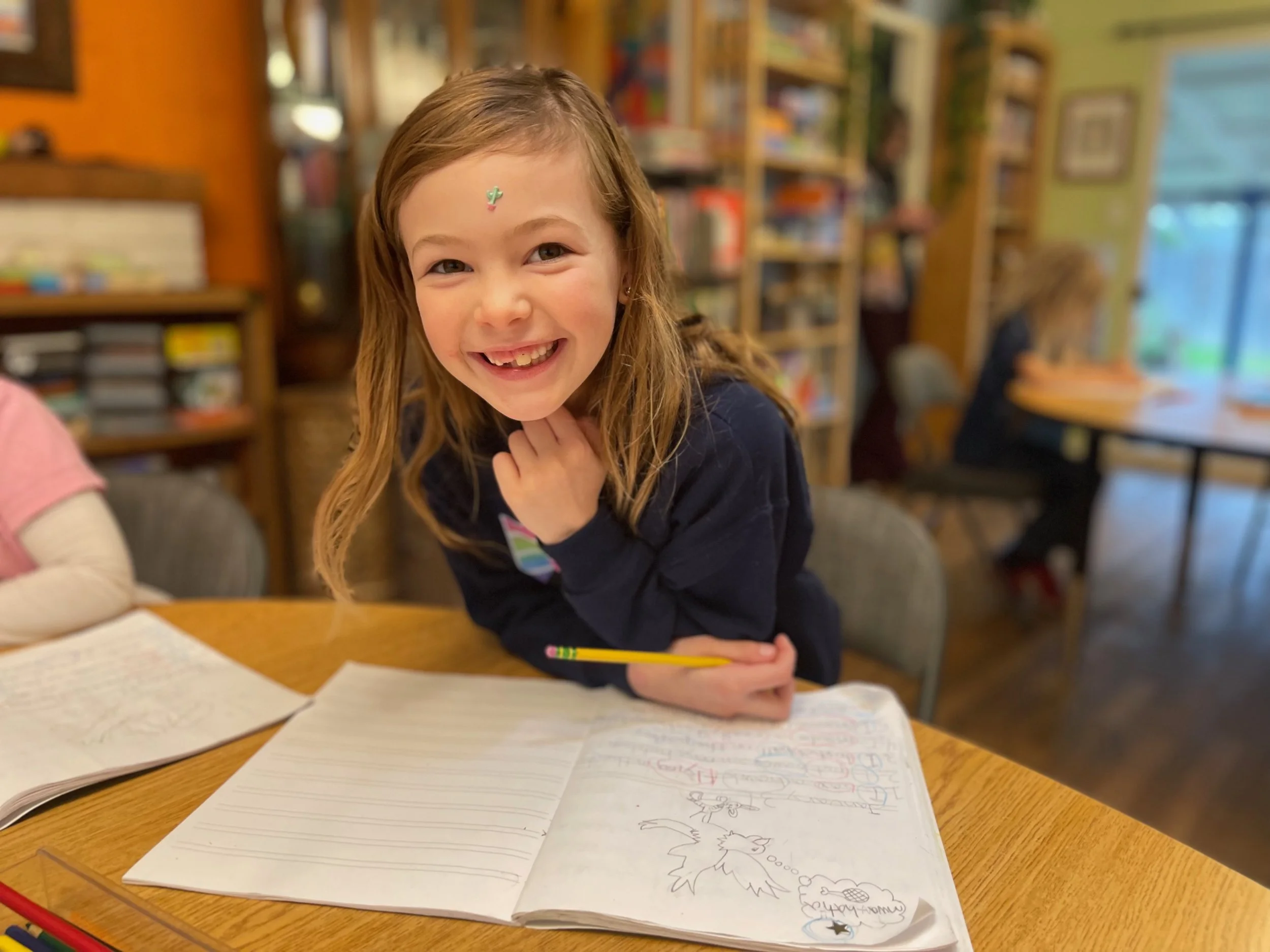
Students exercise their code knowledge by doing writing activities on our worksheets. Writing is the most powerful tool for strengthening the memory! Our worksheets provide the structure to complete 10 writing activities. The worksheets are adaptable to all of the word card sets in the kit. They support teacher’s open use, as well as the self expression of students.
The range of activities on the worksheets give students a variety of ways to creatively practice their code knowledge. They can be given choice, and the expectations adapted for different learners. They can do all the worksheets with each set, or they can select some and not others. It just depends on how much practice each child needs to learn.
In addition to ingraining code knowledge, the worksheets provide practice for many other learning objectives: spelling, copying, drawing, writing conventions, and much more.
The entire code is ready to be explored and mastered, one lesson at a time!
The Beginning Reader Toolkit is divided into 4 levels:
THE SIMPLE CODE
This level is for beginning beginners. It includes 53 sets of word cards, a teacher’s manual, and a set of 12 worksheets.
40 sets of cards present collections of words based on the English phonemes that are represented by one letter: a e i o u b d p s z t d m w f v l n r j c g x h c k. In addition, children learn the ‘ck’ digraph. There are cards at the CVC level and the CCVC/CVCC/CCVCC level.
4 sets of cards deal with code overlap. The letters: e y i o have more than one sound, which are beneficial to learn at this stage.
‘Real or Nonsense?’ cards train children to decode, rather than guess whole words.
‘C letter words’ help train young children to use good letter formation for 5 of the letters in the alphabet: c o a d g.
‘Initial blends’ cards include 2 sets, which train children to ‘blend automatically’ when reading CCVC words.
‘Final blends’ cards include 2 sets, which train children to ‘blend automatically’ when reading CVCC words.
‘Suffix -s’ cards teach children that we add the letter -s at the end of words to make them plural. They read and sort cards based on whether the final -s sounds like /s/ or /z/.
‘Suffix -y’ cards teach kids that when the letter -y is added to the end of a noun, we turn it into an adjective, as in ‘sand - sandy.’ In the process, they learn the main sound of the ‘y’ is /ee/.
THE BASIC CODE
This level is for children who have mastered the Simple Code. It Includes 30 sets of word cards, a teacher’s manual, and a set of 12 worksheets which are adaptable to all the sets.
19 sets of word cards present the two-letter English phonemes: oo oo ee a-e i-e o-e u-e oy ow ck ch sh th th qu ng or ar er.
4 sets of cards deal with code overlap. The letters: c g a have more than one sound, and are beneficial to learn at this stage.
‘k and ck’ cards help kids learn the vowel sounds associated with these spellings.
‘b and d’ cards help clear up the confusion a high percentage of children have with reading and writing these lowercase letters.
‘sight words’ cards present words that aren’t decodable at a beginning level, and should be memorized at this stage. This is a set of all 99 of them.
‘e at the end’ cards help kids decide if the ‘e’ at the end goes with the long vowel sound in the word like a-e i-e o-e, or if it goes with a consonant digraph like ve se ze ce.
‘parts of speech (nouns and verbs)’ cards teach children about these types of words.
‘suffix -er (one that does)’ cards teach kids that you can add -er to the end of a word to make it mean ‘one that does,’ as in ‘run - runner.’
‘suffixes -s -es (plural nouns)’ teach kids these 2 suffixes we use to make words plural.
‘suffixes -s -es -ing -ed (verb tense)’ teach students about the suffixes used to indicated time with verbs.
THE COMPLEX CODE - LEVEL 1
This level is for children who have mastered the Basic Code. It Includes 30 sets of word cards, a teacher’s manual, and a set of 12 worksheets which are adaptable to all the sets.
17 sets of word cards present the spelling variation of these English phonemes: /a-e/ /ee/ /i-e/ /o-e/ /u-e/ /ow/ /oy/ /er/ /oo/ /i/ /ch/ /k/ /j/ /s/ /e/ /l/ and /r/. For instance, the /a-e/ drawer presents words with ‘a-e’ lake, ‘ai’ rain, ‘ay’ play, ‘a’ bank, and ‘ea’ bear.
7 sets of cards deal with the code overlap of these spellings: ‘ie’ ‘a’ ‘o’ ‘ow’ ‘ea’ ‘or’ and ‘wh.’ Students learn the sounds associated with these letters. For instance, the ‘ow’ drawer has words that have the /ow/ sound as in ‘cow,’ and /o-e/ sound as in ‘snow.’
‘first letter says its name’ cards teach a handy trick for dealing with 25 of the most common letter teams in our code.
‘multisyllabic (compound words)’ cards help children learn to read words with 2 ‘chunks.’
‘multisyllabic (double letter words)’ cards help children learn to read words with 2 ‘chunks.’
parts of speech (adjectives)’ cards present a collection of words which describe nouns.
‘suffix -ed (verb tense)’ cards require children to sort words according to the sound of the ‘ed’ ending.
‘homophones’ cards present a collection of homophone pairs. Children learn to remember the spellings of these unique words, as they highlight spelling variations of the same sound.
THE COMPLEX CODE - LEVEL 2
This level is for children who have completed level 1 of the Complex Code. It Includes 30 sets of word cards, a teacher’s manual, and a set of 12 worksheets which are adaptable to all the sets.
10 sets of word cards present the spelling variation of these English phonemes: /o/ /u/ /n/ /g/ /t/ /m/ /sh/ /si/ /oo/ and /f/.
13 sets of cards deal with the code overlap of these spellings: ‘ai’ ‘ou’ ‘o-e’ ‘ue’ ‘ew’ ‘u-e’ ‘i-e’ ‘ey’ ‘ei’ ‘ch’ ‘ar’ ‘u’ and ‘_____.’ Students learn the sounds associated with these letter teams. For instance, the ‘u-e’ drawer has words that have the /u-e/ sound as in ‘cute,’ and the /oo/ sound as in ‘flute.’
‘parts of speech (adverbs)’ cards present a collection of words which describe verbs.
‘homographs’ cards contain words that are spelled alike, but are have different pronunciations and meanings.
‘suffixes -er & -est (comparative and superlative adjectives)’ cards teach students that these suffixes make words mean, ‘more,’ and ‘most.’ They highlight the spelling changes that go with adding this suffix to adjectives: doubling the final consonant, and dropping the final ‘e.’
‘suffixes /shun/ (verb to noun)’ cards teach kids the different spellings of the suffix /shun/: ‘tion’ 'ssion’ and ‘cian.’ They highlight various spelling changes when adding this suffix to a word.
‘suffixes (plain old y will change to i)’ cards teach children to change the final ‘y’ in a word to an ‘i’ when adding a suffix.
‘suffixes (double, drop, or nothing?)’ cards give children practice with the spelling changes that go along with several suffixes.
THE WORKSHEETS:
Read and Write worksheets give practice writing all the words from the set they just read. They give practice with accurate copying.
Hear and Write worksheets facilitate deep learning of spelling patterns. They cause students to map phonemes to spelling patterns from memory.
Word Drawing worksheets facilitate drawing skill while practicing the spelling code.
Graphic Story worksheets facilitate drawing skill and visual imagination. They teach sequencing, narration, story structure, interjections, character development, and more.
Draw and Write worksheets open up the imagination and get storytelling juices flowing. Students like to work out their stories visually, then formulate their thoughts with writing.
Sentence Writing worksheets ask students use words from a set in sentences. They can think of their own, or teachers can orally dictate sentences for the child to write. Teachers can use them for teaching writing conventions, handwriting, parts of speech, sight word spelling, and much more.
Word Search worksheets ask students to create their own word searches with words from a set. When complete, they switch with a classmate, and solve one another’s word search.
Fill-in-the-Blank worksheets are another way for students to make up sentences which involve the words from a set. They’re great for trading with a classmate, then filling in the blanks of one another’s sentences.
Writing Paper: 3 sizes of double lined paper to support proper handwriting development
Basic Code Chart: a comprehensive chart of all of English’s spelling patterns, presented in a logical order.
Spelling Mat: This is a dynamic spelling tool. With all 3 levels of the code mapped to the Basic Code - it’s the logical phonemic basis of our spelling code.
THE TEACHER’S MANUAL INCLUDES:
Guidance on voicing and teaching each English phoneme.
An exploration of what it means to take a linguistic approach to beginning literacy, and why we do.
Teaching points for each set of word cards.
General guidance for teaching in a sound-to-print orientation, including ‘un-learning’ strategies
Do’s and Don’ts of early literacy instruction
Information about the reading sub skills: blending, segmenting, and phoneme manipulation
Step by step instructions for teaching each worksheet lesson
Ways to adapt lessons for different interests, learning speeds, and abilities.
Simple ways to give positive and productive error corrections
A discussion of the importance of handwriting instruction, and how to support proper letter formation
How to assess a child’s skill and relative literacy level
Coming Soon: Pre-order our Beginning Reader Toolkit!
Soon you’ll be able to place an order for our comprehensive curriculum kit. We’re so excited to get it into your hands.
Check back soon for pictures!
Make sure to sign up for our newsletter, and you’ll know immediately when it’s available.
We have yet to determine a price.

“I’m thrilled to share my experience with Deva and the incredible impact her curriculum has had on my daughter.”
From the moment Mirabell began working with Deva, she was engaged and excited about learning. With Deva's guidance, my daughter has unlocked the mysteries of the English language on her own. This discovery-driven learning method has not only made reading enjoyable for my daughter but has also empowered her confidence in her abilities. This year she has been reading novels, for FUN! Her teachers have asked me what we are doing and I am so happy to tell them about Reading For Life!
The structured support she offers ensures that both parents and students are never left feeling overwhelmed. We appreciate the ongoing guidance, which has been instrumental in our journey toward literacy. The curriculum is meticulously crafted to cater to individual learning styles and abilities. The variety of activities keeps my daughter engaged and fosters a deep understanding of language fundamentals.
Thanks to Deva’s program, my daughter is not only becoming a skillful reader and writer but is also developing a lifelong love for learning. I wholeheartedly recommend Deva’s curriculum to any parent or teacher looking to make a meaningful difference in their child's literacy journey. We are proud to be part of the Reading For Life family!”
— Cindy Comfort